ATHEORY.AI

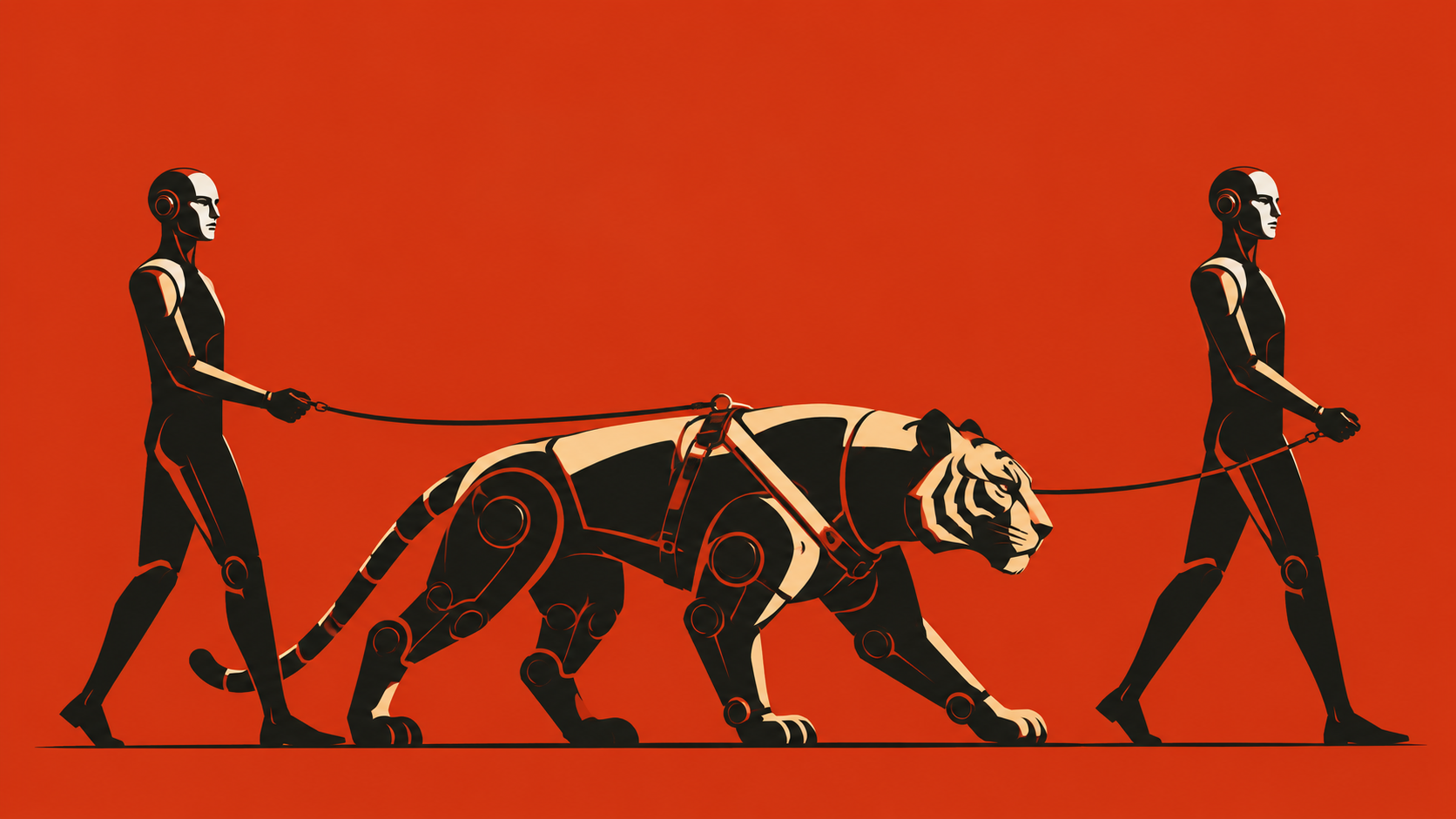
Taming AI for development

Building the tools your LLM loves

ATHEORY.AI is building a suite of open source tools that define reusable skills, preserve project context, package and publish agent capabilities, and coordinate work across repos and runtimes. Each tool can be used on its own. Together, they form a harness around the agents you already use. Learn More

Agent Intelligence

Make your agents smarter about the code they write.

Capability

Skillex

Managed, versioned, portable skills with a query engine for agents.

Instead of crawling a tree of skill files every turn, the agent queries an index and gets exactly the skills that apply, faster and without the context pollution. Skills live with the code they describe, shipped as consumer skills for your users and contributor skills for your team, so they stay correct and arrive automatically.

Skill Packsextend Skillex to publish collections of global skills through a secure distribution pipeline.

Knowledge

Context Engine

Semantic understanding built over your code's structure.

Context Engine indexes a codebase into a graph of calls, references, concepts, and decisions, then answers by walking it, so retrieval is deterministic and comprehensive, not grep-and-pray or a vector search returning whatever embeds closest. Large codebases that overflow any context window become something an agent can navigate completely.

Context Engine SDKextend Context Engine with new semantic understandings, customizing its intelligence to your system.

Runtime

Argent

Most multi-agent tools focus on making agents talk to each other.

Argent focuses on giving them a shared model of the system they're working in. It turns your machine and project graph into a workspace every agent can read: named services, sandboxes, checks, project contracts, memory, and human handoff, all modeled as capabilities they call. Agents don't need a switchboard when they share the same ground truth.

Keep the agents you already useGive them somewhere real to work.

Apps

Supervise agent work and turn product intent into durable context.

AI Behavior

ATHEORY.AI Studio

Build AI behavior you can prove.

ATHEORY.AI Studio turns prompts and skills into structured, versioned assets; tests them against representative datasets; and governs the evidence, approvals, and portable releases that put them into production.

Design

Designer

A design-system layer agents can actually follow.

Designer turns interface decisions, component rules, type, spacing, radius, color, motion, and composition into governed relationships designers can control and agents can apply.

Specs

Spec IDE

A workspace for specs that become implementation contracts.

Spec IDE turns product intent, architecture constraints, and implementation details into durable artifacts instead of scattered docs and one-off handoffs.

Frontend

Build web-native application surfaces agents can understand and compose.

Web-native frontend

Kitsune

A modern framework built on web components, event boundaries, and local memory.

Components emit meaning, boundaries carry context, and modules handle consequences, so agents can assemble interfaces without reinventing the app.

Theories

Essays, research notes, and working theories behind the lab.

A Theory of AI

Essays on what AI changes about organizations, software, judgment, and the systems around the model.

A Theory of Design

Research and notes on design systems, generated interfaces, and the structure behind cohesive product experience.

Coming Summer 2026

Modern Frontend

AI tools write the frontend they were trained on, which is the frontend of the last decade. The next decade of interfaces won't fit in that shape. This book is about the platform underneath — the one light enough, durable enough, and deployed everywhere enough to actually carry what's coming.

Blog

News and thoughts on tools, systems, and building in public.

View all